

Cosmetic FMCG industry packaging testing methods and performance optimization
Hangzhou Pin enjoy technology Co., Ltd. paper products R & D center
With the continuous improvement of people's living standards and the popularization of mobile Internet e-commerce, e-commerce network shopping is becoming more and more convenient, and there are more and more stringent requirements for the packaging design and manufacturing of cosmetics FMCG products. The color box packaging with beautiful plane and structural design plays a very important role in the product personalization and differentiation of the shelf display area and how to attract the attention of consumers and promote sales. At the same time, the continuous improvement of e-commerce network purchase, the product in the production line automatic packaging process of easy packaging performance; Guarantee of strength protection during transportation and storage; As well as the easy recovery of packaging after opening and using, the control of the overall cost of packaging and other factors, more and more by the upstream and downstream practitioners are not used to thinking about. Based on the above influencing factors, we discussed whether the packaging quality and efficiency of cosmetic FMCG packaging could be comprehensively and objectively evaluated through the optimization of packaging testing technology.

Classification of conventional cosmetics
Skin care: face cream, foot cream, eye cream, sunscreen, mask, hand cream, shower gel, toner, night cream, cleanser, makeup remover, powder, lotion, cleanser, essence, etc.
Hair care shampoo, hair conditioner, shampoo, hair conditioner, hair dye, hair care lotion, etc.
Cosmetics blush, primer, eyeshadow, makeup products, lipstick, nail polish remover, BB cream, mascara, perfume, eye and lip cream, lip gloss, foundation, etc
Oral toothpaste, mouthwash, etc.
Types of cosmetic packaging materials and related quality control requirements
Cosmetic packaging materials can be divided into main packaging containers and outer packaging materials. The main packaging container usually has: plastic bottles, glass bottles, flexible packaging, vacuum bottles and so on. The outer packing materials usually include: color box, outsourcing box, middle packing box, etc.
The packaging testing routine is divided into plastic flexible packaging barrier performance testing, paper packaging raw material physical and mechanical properties testing, inner packaging printing quality testing, self-adhesive label testing and outer box transportation packaging testing.
Detection of barrier properties of cosmetic packaging
Undoubtedly, the primary function of cosmetic packaging is to protect the contents. The ingredients of cosmetics add substances required for microbial growth and reproduction, such as glycerin, protein, etc., and cosmetics are contaminated by microorganisms, that is, odor, deterioration and mold, product quality decline, water and oxygen are factors affecting microbial growth, so the barrier performance of the packaging is one of the important detection items of cosmetic packaging. Barrier refers to the barrier effect of packaging materials on gas, liquid and other penetrants, and the barrier performance is an important factor affecting the quality of products in the shelf life. The barrier performance test includes the test of the permeability of cosmetic packaging to oxygen, water vapor and aromatic gases.
Oxygen transmittance detection
It is mainly used for the detection of oxygen transmission rate of film, composite film and overall packaging of cosmetic bags or bottles. The pre-treated sample is squeezed between the test chamber, oxygen or air flows on one side of the film, and high-purity nitrogen flows on the other side of the film. Oxygen molecules are diffused through the film into high-purity nitrogen on the other side, and the flowing hydrogen is carried to the sensor. The oxygen penetration rate is calculated by analyzing the oxygen concentration measured by the sensor.
Water vapor transmittance detection
It is mainly used for the determination of water vapor transmittance of cosmetic packaging film materials and packaging containers such as bottles, bags and cans. Through the determination of water vapor transmittance, the technical indicators of packaging materials and other products can be controlled and adjusted to meet the different needs of product applications. The sample is clamped between the test chamber, nitrogen with stable relative humidity flows on one side of the film, and dry nitrogen flows on the other side of the film. Due to the existence of humidity difference, water vapor will pass through the film from the high wet side to the low wet side, and the water vapor passing through the low wet side will be carried by the flowing dry nitrogen to the sensor, and the sensor will output electrical signals to calculate the water vapor transmission. For containers such as bottles and bags, dry nitrogen flows inside the container, and the outside of the container is in a high humidity state.
Deodorant performance testing
This index is very important for cosmetics, once the fragrance of cosmetics is lost or changed, it will affect the sales of products. Therefore, it is very important to test the fragrance preservation performance of cosmetic packaging. Under the specified temperature conditions, the penetration chamber is separated by the sample, one side is the side with high concentration of aromatic gas, and the other side is the side with low concentration. In this way, a certain concentration difference of aromatic gas is formed on both sides of the sample, and the aromatic gas will pass through the film into the low concentration side and be carried by the carrier air into the separation chamber. The content of the aromatic gas in the carrier gas is determined by the FID hydrogen flame ionization detector, and the amount of aromatic gas passing through the sample per unit time is calculated.
Physical and mechanical properties testing of paper packaging raw materials
The mechanical properties of cosmetic packaging play a very important role in the packaging processing, transportation and shelves of cosmetics. The quality of raw materials directly determines the safety protection of food in circulation. Routine testing items include: thickness weight test, tensile strength and elongation test, composite film peeling strength heat sealing strength, paper surface smoothness test, paper stiffness and crease stiffness test, tear strength test, friction coefficient test, peeling and heat sealing strength test and other performance indicators.
Material thickness and gram weight test
Quantitative is one of the most basic performance indicators of paper-based packaging materials, quantitative refers to the quality of paper and cardboard unit area measured in accordance with the prescribed test method, the unit is g/m2. (Defined by ISO536)
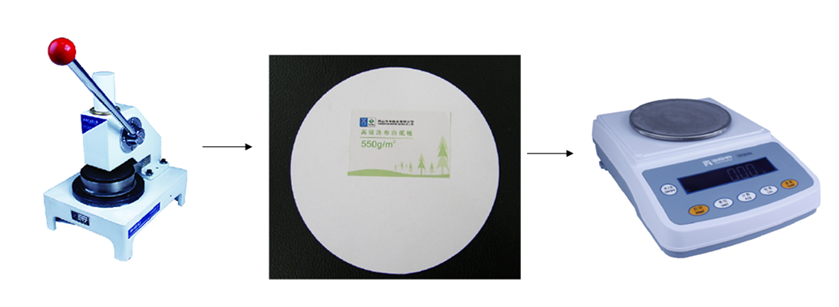
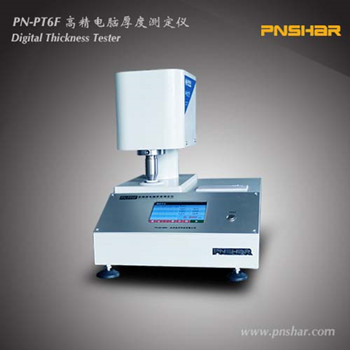
Thickness is the basic performance parameters of paper-based materials or plastic film packaging materials, some basic characteristics and strength properties of paper and cardboard are related to thickness, so it is an important performance test item, the unit is μm or mm. Thickness testing must be carried out under specified conditions, and the thickness testing instrument must meet the three basic requirements of testing contact area, contact pressure and probe falling speed, otherwise the measurement results are inaccurate.
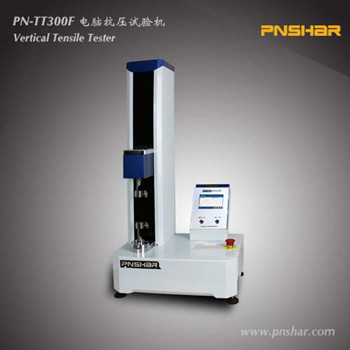
Tensile strength test
The tensile strength of paper-based materials or plastic film packaging materials is the maximum tensile strength that the fibers can withstand. This feature is particularly important for reel packaging materials used in printing presses. The test method is to take a sample with a cut width of 25 mm (mm) and a length of 150~200 mm (mm), and apply constant speed stretching at both ends of the paper length to measure the tensile tension, tensile strength and elongation of the sample when it is pulled.
Paper smoothness test
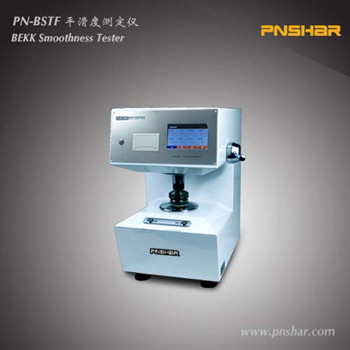
For high-end color box packaging such as cosmetics, high-grade coating materials such as white card and gold card are commonly used. This kind of refined color box, generally on its surface will be printed beautiful graphics, the surface of the material must be good smooth performance, and smoothness is the index of assessing the smoothness of the paper.
The smoothness of the paper surface has a direct impact on printing, and the higher the smoothness of the paper, the more detailed and precise printing outlets can be used to produce higher quality prints. We require a paper with even smoothness, followed by a paper with high smoothness. The unit of smoothness is the time of air flow. The test principle is to use a quantitative air pressure on the surface of the paper on an area of about one square inch, so as to calculate the time of air flow along the surface. The longer the time, the higher the smoothness.
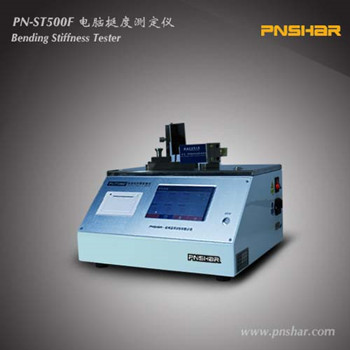
Paper stiffness test
Flexural stiffness is an index to evaluate the flexural rigidity of paperboard. The test principle is the force or moment required to bend the specified size of the sample to a certain Angle, is a measure of the strength of paper and cardboard bending performance indicators, in the packaging cardboard, the higher bending stiffness so that the cardboard has a certain stiffness and strength, high stiffness, beautiful appearance, flat, but it is too large, molding is more difficult, and will increase the cost. The stiffness is related to the thickness and quantity of the cardboard, so the stiffness can be controlled within a certain range, which can meet customer requirements and save costs.
Crease stiffness is an important indicator of high-end color boxes such as cosmetics. The main principle is to measure the indentation force of color boxes (such as cigarette boxes and cosmetics boxes) (that is, the recovery force of 90° creases).
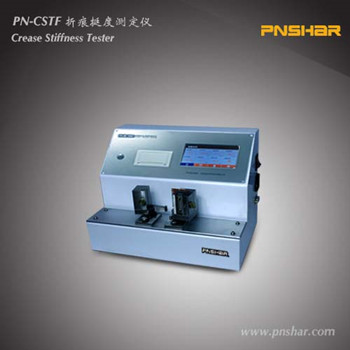
In the high-speed automatic packaging line, there are often unqualified cartons, such as irregular shape, bending and weak bonding, which reduces production efficiency. The reason for the above phenomenon is that the stiffness of the cardboard and the ratio of the crease force of the cardboard after indentation is not appropriate. The reason for the irregular shape of the carton is that the crease force is too small and deformed; The cause of poor adhesion is too much crease force, so it bounces off from the adhesive. The cause of the bending around the carton is that the indentation is too stiff compared to the cardboard, and the indentation tries to bounce off, and the cardboard does not have enough stiffness to stop it from bouncing off. The paper box with appropriate crease force and stiffness ratio is smooth and full after forming on the high-speed automatic packaging line, and the folding Angle is straight and sharp.
Tear strength test
Paper tear refers to the force required to tear a pre-cut sheet of paper or board sample under certain conditions, in mN. Tearing degree reflects the binding force between paper and cardboard fibers and the strength of the fibers themselves, which is a very important strength performance index for packaging paper and cardboard. The unit is Newton.
Friction coefficient test
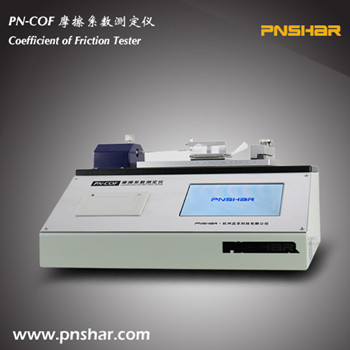
The friction coefficient refers to the ratio of the friction force between two surfaces and the vertical force acting on one surface. The friction property of a material can be characterized by the dynamic and static friction coefficient of the material. If the friction coefficient of the packaging is low, it is easy to slip and seal the wrong edge when placing the rolled bag. If the friction coefficient is too large, it is easy to unroll, and even the flexible plastic packaging is stretched and deformed, and it is also easy to have poor opening of the packaging bag, affecting the filling efficiency of the contents. Therefore, controlling the appropriate friction coefficient is conducive to the smooth progress of the packaging process. Working principle: Two test surfaces are flat together, under a certain contact pressure, so that the two surfaces relative move, record the required force, calculate the static friction coefficient and dynamic friction coefficient.
Peel strength test
Peel strength refers to the maximum force required for unit width stripping of the bonded material from the contact surface. The peel Angle is 90 degrees or 180 degrees, and the unit is: Newton/meter (N/m).
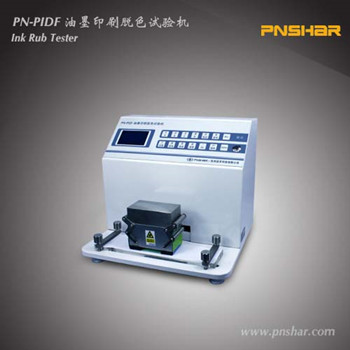
Heat seal strength test
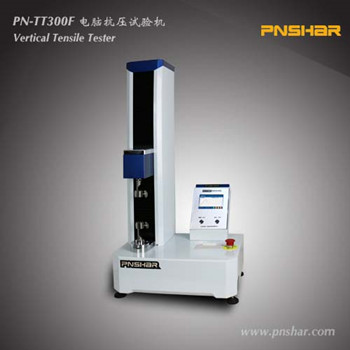
The test requirements for heat sealing strength are: the sample is centered on the hot sealing part, the two layers are opened at 180 degrees, the two ends of the sample are clamped on the upper and lower clamp of the computer tensile testing machine, the axis of the sample should coincide with the center line of the upper and lower fixture, and the tightness is required to be appropriate, the maximum force value of the test sample when it breaks, the unit is: N.
Cosmetic inner packaging printing quality inspection
Wear resistance test of printed surface
The surface strength of the box board is very important, in the corrugated board production process, the box board is forced to pull out of the surface will be subjected to a great deal of stress and strain, if the surface peeling strength is not good, the fiber on the surface of the cardboard will be pulled away or peeled off, in other processing machinery or transportation process the surface will also be caused by mutual friction and surface peeling. The peeling of the surface of the carton not only affects the appearance, but more importantly, may damage the printed graphic mark on the surface of the carton. Therefore, the wear resistance is an important performance index of the box board.
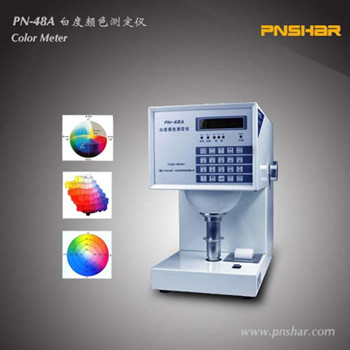
There are many methods for the determination of wear resistance. At present, the common method is the measurement of surface interaction under constant pressure, which is evaluated by the number of interaction times when the surface begins to peel.
Ink adhesion fastness detection
The adhesion fastness of the ink is one of the important indicators to assess the performance of the ink, only the ink has a certain adhesion fastness, in order to be well attached to the surface of the printed material, and only in this way will play the adhesion and protection of the ink to achieve the exquisite degree of color after printing.
There are many methods for the determination of wear resistance. At present, the common method is: the printing surface of two prints is relatively stacked together, and the pressure of 2-4 pounds is repeatedly rubbed, and the scratch mark or the ink falls off indicates that the ink adhesion is poor.
Color difference test
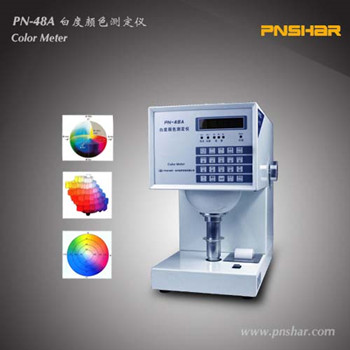
Cosmetic box in the printing process due to various reasons, there is a color difference with the sample after the printing is completed, which leads to the quality of the printed matter is reduced, we through the color difference detection of printed matter, the cause of color difference analysis, to achieve the purpose of effective control of the color difference of the packaging box.
Color difference detection Conventional portable color difference meter, with L,a,b values to represent the color value.
Cosmetics self-adhesive label detection
Self-adhesive labels are widely used in cosmetic packaging, and the test items are mainly for the bonding performance test of self-adhesive labels (self-adhesive or pressure-sensitive adhesive), the main test items have three indicators: initial adhesion, adhesion, stripping strength (stripping force).
Initial viscosity test
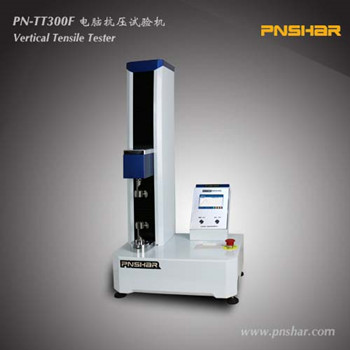
In the initial viscosity test, the inclined plane rolling ball method was adopted to test the initial viscosity of the sample through the adhesion effect of the adhesive tape on the steel ball when the adhesive surface of the sample was briefly contacted with a small pressure. The maximum steel ball number that can be adhered to was used to characterize the initial adhesion property of the self-adhesive.
Adhesion energy detection
It is necessary to hang the test board affixed with adhesive tape samples on the test rack vertically, and hang the weights of the specified weight at the lower end. The adhesive displacement of the sample after a certain period of time or the time when the sample is completely detached are used to characterize the adhesive property of the self-adhesive label.
Peel strength test
The stripping strength is an important indicator to measure the bonding performance of the self-adhesive label, and the detection of this indicator can usually be carried out by intelligent electronic tensile testing machine or electronic stripping testing machine.
Cosmetics outer box transportation packaging test
Cosmetics after transportation, shelf display and other links to intact reach the hands of consumers, you need to have good transportation packaging. At present, the transportation packaging of cosmetics is mainly based on corrugated cartons, and the conventional detection and control indicators are the compressive strength test, stacking performance test, drop strength test and vibration performance test of cartons.
Compressive strength test
The method of empty box compression test or in fact container compression test is: the test sample is placed in the middle of the upper and lower pressure plate of the compression test machine, and the upper pressure plate is applied evenly at a certain speed on the top of its pressure until the sample is resistant to collapse, in order to assess the ability of the carton to withstand the maximum external pressure.
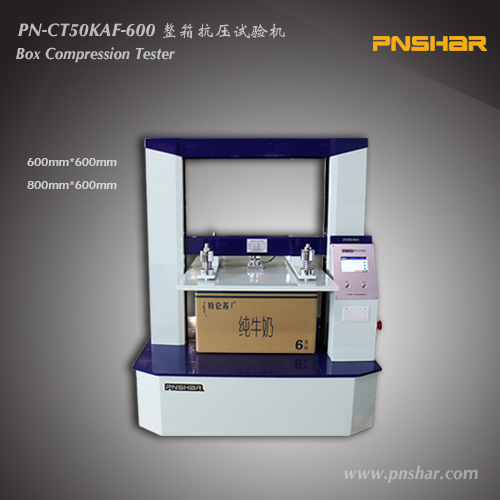
Stacking performance test
Stacking test is a kind of static pressure simulation of warehouse storage state test, mainly only for cartons and all kinds of packaging containers stacking test, through the carton stacking test to understand the quality of the tested products! Is the carton and packaging container manufacturers must understand the application of detection methods! It is of great significance to product quality control!
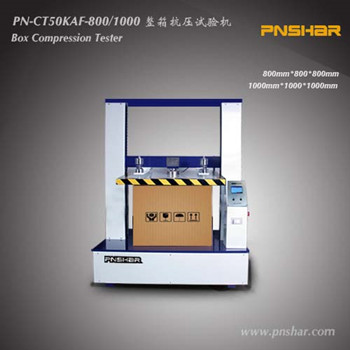
Drop strength test
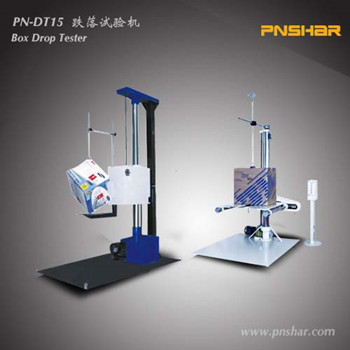
It is used to test and evaluate whether the current packaging methods and materials can provide effective protection against unexpected drops, impact pressures and vibrations that may be encountered during the production, use, storage and transportation of the product, and to verify the impact strength of each structure or component of the product.
Vibration performance test
Transportation is an inevitable link in the process of circulation. The package will vibrate during transportation, regardless of the means of transportation used. According to statistics, about 1/3 of the product damage caused by various environmental factors is caused by vibration. The vibration test simulates the vibration that the transportation package may encounter during the circulation process, detects whether the package is used as a insulation, and assesses the protection ability of the package's internal contents.
The vibration waveform of vibration test can include sine wave, triangle wave, sawtooth wave, square wave and so on. Because the generation, control and measurement of sine wave are relatively easy to achieve, in the actual process, the waveform of vibration is also similar to sine wave, or can be broken down into sine waves of different frequencies, therefore, sine vibration test is a commonly used simulation method, if you do not do special instructions, vibration test generally refers to sine vibration test.
Easy opening test of cosmetic bottle packaging
Bottle packaging is a kind of packaging form used more in the field of cosmetic packaging. The size of the locking and opening torque value of the bottle cap is one of the key process parameters controlled by the production unit offline or online. Whether its torque value is appropriate has a great impact on the intermediate transportation of the product and the final consumption. The opening and locking force of the bottle cap can be tested by means of a torque meter, and the opening and locking force detection of the bottle cap should also be associated with the sealing test of the package.
Sum up
To sum up, according to the preservation requirements of cosmetic packaging, its performance testing can be mainly divided into two parts: content preservation and product appearance, of course, the basic mechanical indicators of packaging materials must be met. Among them, anti-corrosion, anti-oxygen and prevention of odor loss are the key points of cosmetics preservation, involving material barrier, headspace analysis and sealing test. The aesthetic appearance of the packaging can directly affect the sales of the product, the main influencing factors are the printing of the outside of the packaging, opening, the surface touch of the packaging material, the printing effect, and the bonding performance of the cosmetic self-adhesive label. Understanding these performance indicators of packaging materials and packaging, we can avoid some mistakes in the design of cosmetic packaging, while enhancing the usability, protection and aesthetics of packaging design.
Cosmetics FMCG industry packaging testing methods and performance optimization scheme download